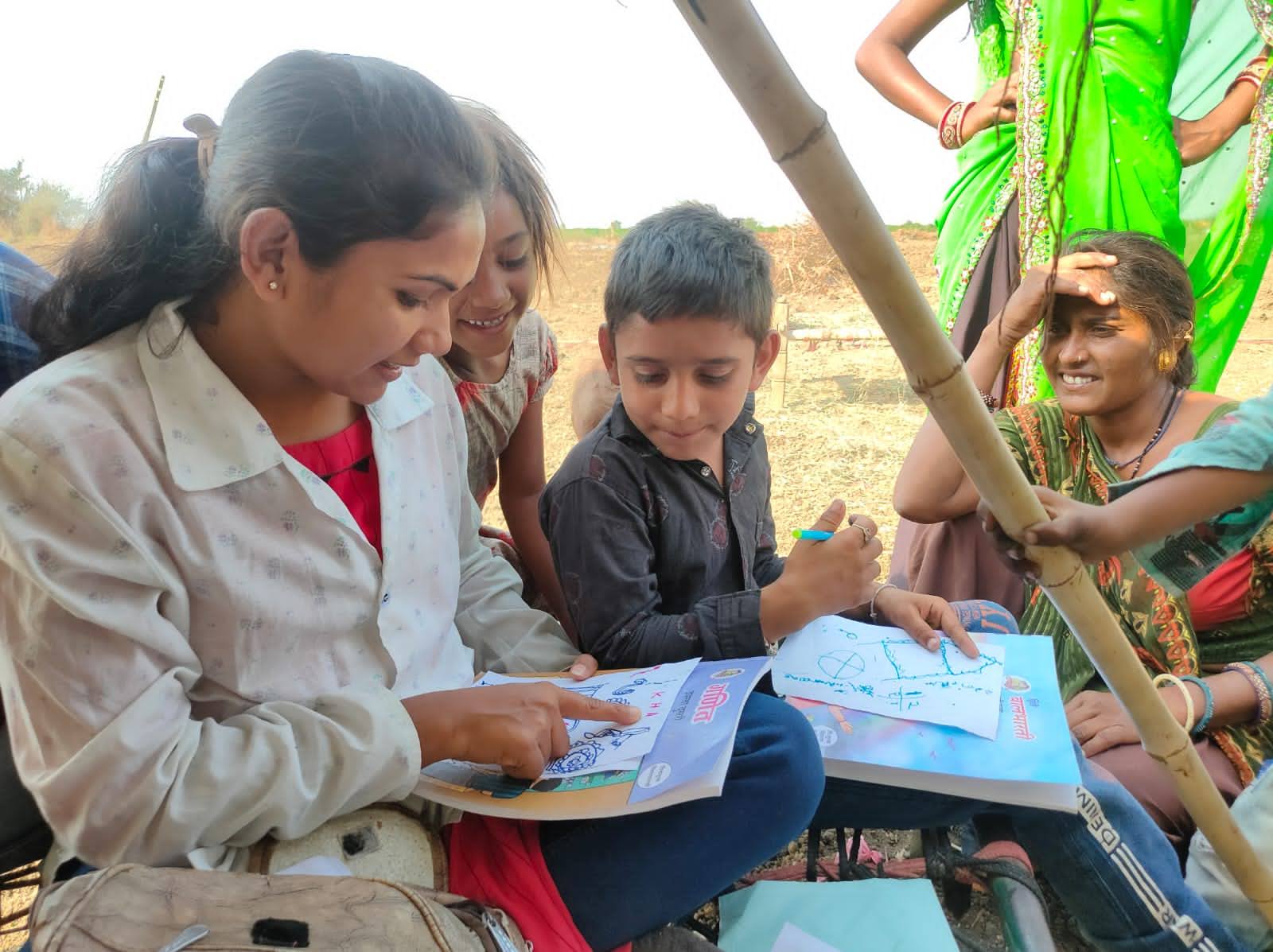
The most distinctive aspect of the third cohort was this: for the first time in the Bharwad community, we began working at “scale”—running four to five centers simultaneously. That year saw the highest number of experiments. We learned immensely, and we also encountered significant challenges. But through that learning came growing clarity—about what works with a nomadic community, what does not, and how we must approach the work.
Given the scale of experimentation and the number of difficulties, many could not continue the journey. At one point, if the remaining three or four members had also decided to leave, the fellowship would have paused entirely. We might have had to restart a year or two later. The biggest loss would have been the rhythm we had just begun to build.
But Vikrant, Asmita, Kalyani, Varsha, and Monali chose to stay, accepting the challenges. Because of that, the flow continued—and we were able to sustain the journey consistently through 2025–26.
Each person in this team played a distinct role, yet remained connected to a shared purpose. Vikrant’s calm and patient approach, his collaborative nature, and the relationships he built created a deep sense of belonging within the team. Asmita’s communication skills—especially with women and adolescent girls—allowed sensitive conversations around periods, pregnancy, and health to happen naturally, building trust within the community. Her commitment to continuous learning through online courses and books, and her clarity in expressing her views, sharpened everyone’s thinking.
For Monali, children were always at the core. She read extensively, took courses, and implemented what she learned with honesty on the ground. She worked to build children’s confidence and constantly explored how learning could extend beyond the center into the larger village context. Kalyani’s strong drive to learn and her creativity became a source of experimentation and innovation. Varsha’s courage—calling out what was wrong, standing firmly for what was right, trying to bridge the Pardhi and Bharwad communities, and pushing for basic facilities—expanded the work beyond education into something more human and systemic.
Holding all of this together was Aishwarya—offering steady encouragement, conversations, and the energy to keep moving when things felt difficult. With her maturity and imagination as a teacher, she continually raised the bar for classroom quality and helped the team see what was possible.
The contribution of the third cohort was not just about running centers. It was about standing firm in a difficult phase, sustaining the work, and ensuring that the Learning Companions journey did not break. It was because of the resilience of these five individuals that we were able to manage, sustain, and eventually grow this work.