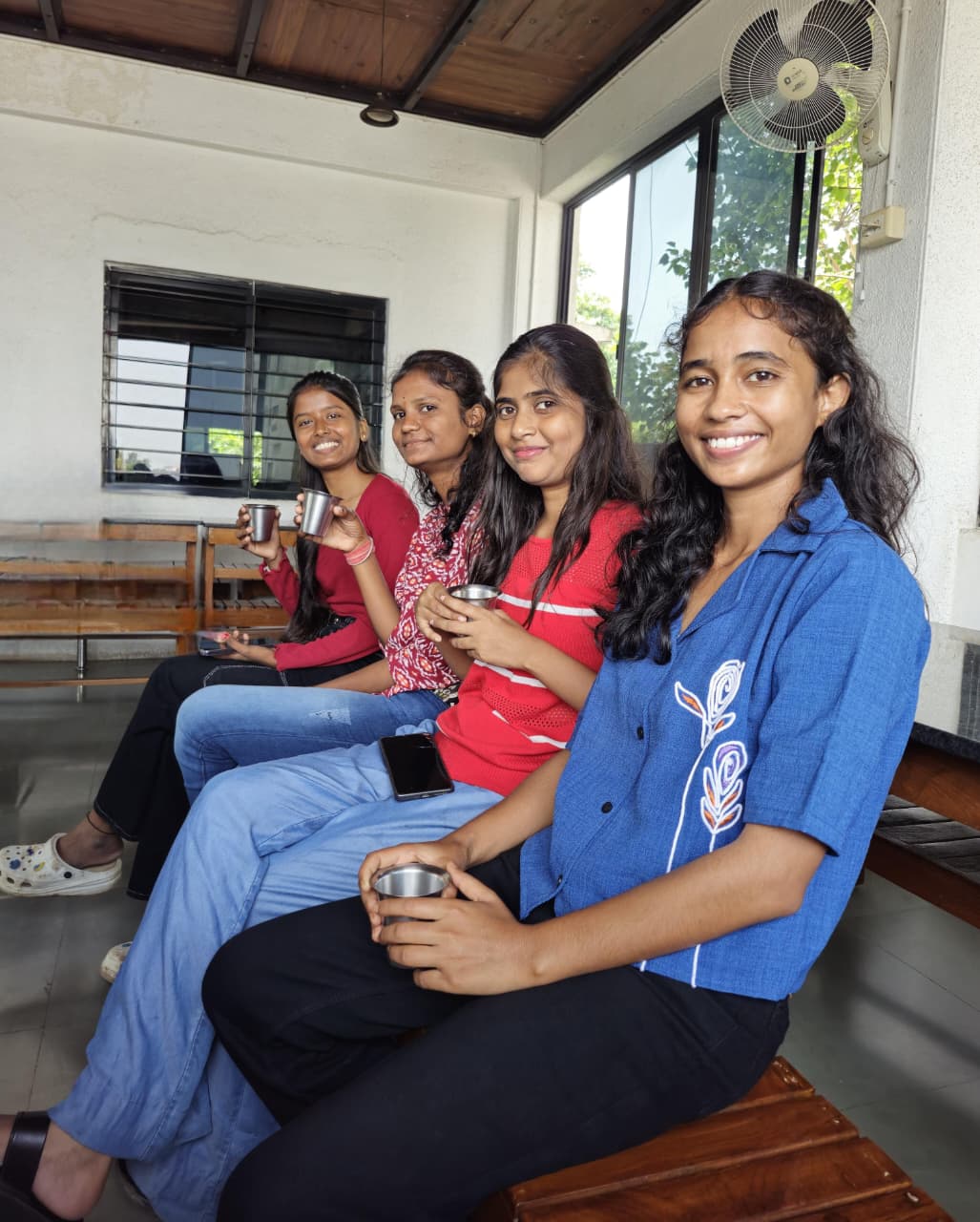
By the time we reached the seventh cohort, a strong belief had taken root within us — that we could dream big and achieve those dreams, one after another. We began to see clearly that sometimes all it took was a small “push” for the team to rise to a new level.
It was in this batch that we made a firm decision to introduce structured English Learning for children. For the first time, we became truly outcome-driven in English — not just teaching, but carefully measuring what was changing, planning for those outcomes, and continuously refining our methods. In this process, both the fellows and the program team actively participated in learning English themselves. This created a powerful message for the children: we are learners too.
During this phase, the program team began taking on independent responsibilities. One team fully led the English project, others moved forward the on-ground development of Riyaaz Ghar, implemented initiatives like Abhivyakti, and took ownership of fundraising. Work increasingly moved forward in a project-driven manner. What developed through this was not just the ability to execute tasks independently, but the capacity for leadership, ownership, and mutual trust.
Within this team journey, individual moments became defining. Prachi’s powerful communication — her ability to understand others’ emotions and needs, to complete tasks even when exhausted, and her disciplined persistence during theatre practice — energized others. Minanath cultivated a culture of “doing the work without complaint,” handling children calmly in class without irritation.
Jeevan consistently took on the challenge of teaching older children, which was often demanding. Even when classes didn’t go well, he kept searching for ways forward — visiting homes to bring children in, managing other responsibilities from early morning until evening (cow feed work, tracking cattle locations), and still returning to take classes. Through games and activities, he sustained relationships with children. Mayur increased engagement by teaching fluidly through diverse activities.
The visible growth during this journey became central to this cohort — building meaningful connections with women in the community, visiting homes with warmth, forming strong bonds with children, independently managing classes, and sustaining energy despite constant travel. David’s ever-ready, friendly presence created a sense of care and safety among children. Navinta’s positive communication with younger children, her careful understanding while planning lessons, and her clarity in expression strengthened the team. Rohini’s ability to make quick decisions without getting stuck in difficult situations brought momentum to many initiatives.